


LIFESTYLE HEALTH | EDITORIAL
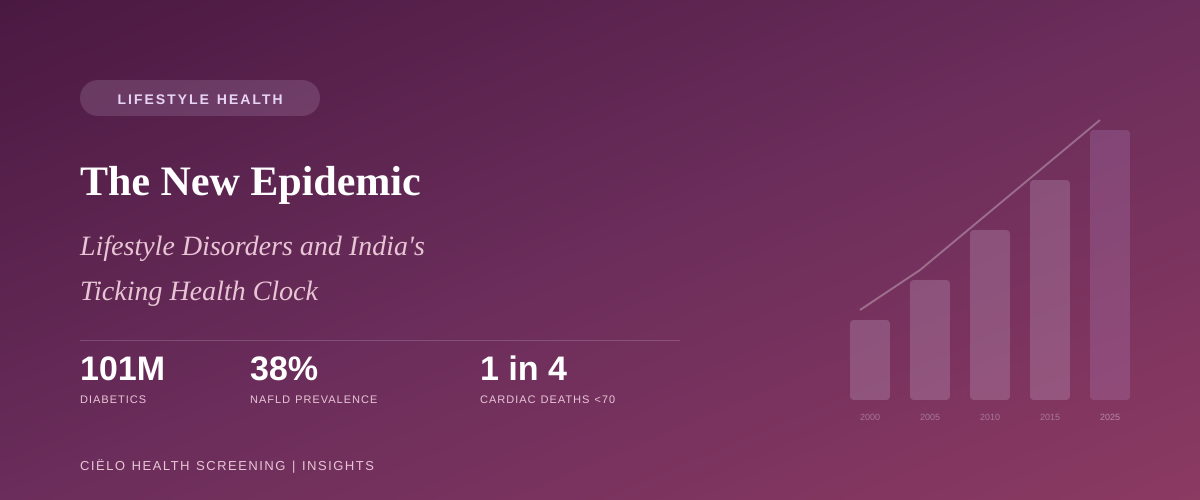
The New Epidemic
Lifestyle Disorders and India’s Ticking Health Clock
India is in the grip of an epidemic that carries no single pathogen, requires no quarantine, and commands no daily headline count. It is the epidemic of lifestyle disorders—a slow, pervasive, and deeply personal crisis playing out across every state, every age group, and every economic stratum. Diabetes, cardiovascular disease, fatty liver disease, obesity, and certain cancers have become so prevalent that they have begun to reshape the country’s demographic future.
What makes this epidemic especially insidious is its ordinariness. It does not arrive with the dramatic urgency of an infectious outbreak. It accumulates—quietly, incrementally—in the daily choices of diet, movement, sleep, and stress management that collectively define a life. By the time the numbers on a blood report cross from normal to concerning, the underlying patterns may have been entrenched for years.
Diabetes: The Scale of the Challenge
India is now home to an estimated 101 million people living with diabetes, making it the nation with the highest diabetic population in the world. An additional 136 million are estimated to be prediabetic—a condition that, without intervention, progresses to full diabetes in a significant proportion of cases. What is particularly alarming is the age of onset. Type 2 diabetes, once considered a disease of the middle-aged, is now being diagnosed routinely in individuals in their late twenties and early thirties.
The South Asian genetic predisposition to insulin resistance plays a role, but genetics alone does not explain the trajectory. The transformation of India’s food environment—the proliferation of ultra-processed foods, sugary beverages, and refined carbohydrates—coupled with declining physical activity has created a metabolic environment in which diabetes thrives. Urban Indians today consume on average 50 per cent more sugar than their parents’ generation. Sedentary desk work has replaced the physical labour that once characterised most occupations.
The screening implications are clear. HbA1c and fasting glucose alone, while useful, offer only a partial view. A comprehensive metabolic assessment that includes fasting insulin, HOMA-IR calculation, visceral fat quantification through DEXA, and hepatic fat fraction through imaging provides a far more complete picture of where an individual stands on the insulin resistance spectrum—and how urgently intervention is needed.
Cardiovascular Disease: Earlier, Faster, Deadlier
Cardiovascular disease remains the leading cause of death in India, responsible for approximately 28 per cent of all mortality. But the Indian pattern differs markedly from the Western one. Indians develop coronary artery disease roughly a decade earlier than their Western counterparts. A heart attack at 45 is not unusual. Sudden cardiac death in apparently healthy individuals in their forties has become disturbingly common.
The reasons are multifactorial. South Asians carry proportionally more visceral adiposity relative to body weight, making BMI a poor predictor of cardiac risk in this population. Elevated levels of lipoprotein(a)—a genetically determined risk factor—are significantly more prevalent among Indians. The interplay between stress, sleep deprivation, and metabolic dysfunction further compounds the risk.
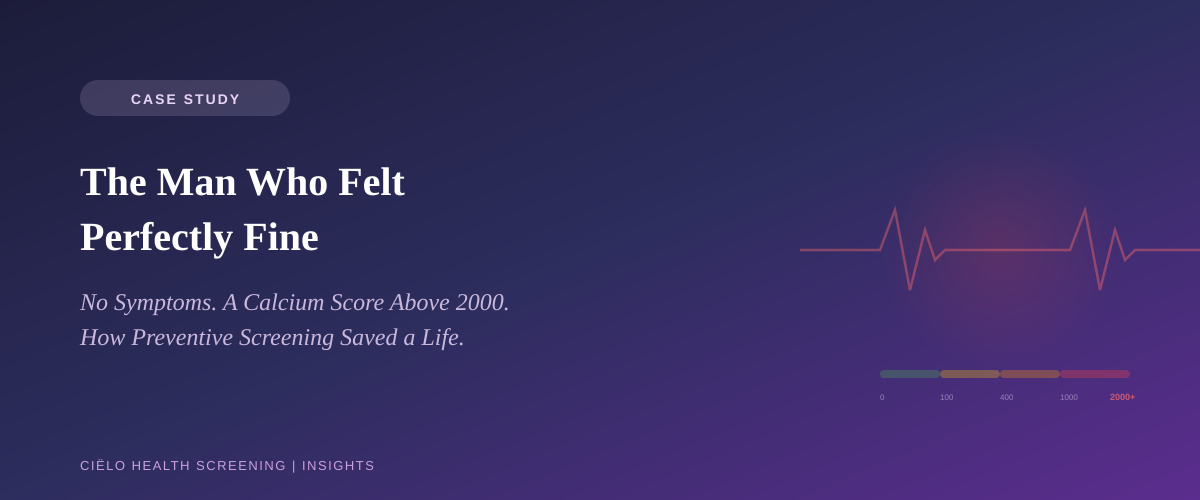
The coronary artery calcium score has emerged as one of the most powerful tools in preventive cardiology precisely because it detects structural disease—actual calcified plaque—regardless of symptoms. A zero score is powerfully reassuring. A score above 100 demands attention. A score above 400 requires urgent intervention. Yet the vast majority of Indians who would benefit from this simple, non-invasive scan have never had one. The gap between what is available and what is utilised remains one of the most consequential failures in Indian healthcare.
Fatty Liver: The Overlooked Epidemic Within the Epidemic
If diabetes is India’s headline metabolic crisis, non-alcoholic fatty liver disease—now increasingly referred to as metabolic dysfunction-associated steatotic liver disease, or MASLD—is its silent companion. Prevalence estimates suggest that roughly 38 per cent of India’s adult population has some degree of hepatic fat accumulation. Among urban, sedentary individuals, the figure may be considerably higher.
The concern is not the fat itself but its trajectory. A proportion of individuals with simple steatosis will progress to steatohepatitis—inflammation of the liver—and from there to fibrosis and eventually cirrhosis. This progression can occur without any symptoms, without any pain, and without any visible change in appearance or energy until the damage is advanced. Liver cancer, too, can develop on the substrate of chronic inflammation.
Screening for fatty liver requires more than a basic ultrasound. Quantitative assessment of liver fat fraction, elastography to measure stiffness as a marker of fibrosis, and blood-based fibrosis scores provide the layered view necessary to distinguish between benign fat deposition and a liver on a trajectory toward serious disease. When combined with metabolic markers—insulin resistance, inflammatory markers, lipid patterns—the picture becomes actionable.
Cancer: The Case for Screening in an Indian Context
India accounts for roughly one in ten of the world’s new cancer diagnoses each year. Breast cancer, cervical cancer, lung cancer, colorectal cancer, and oral cancer represent the most significant burdens. What is striking is that many of these cancers, when detected early, are highly treatable—yet the majority of Indian cancer diagnoses still occur at Stage III or IV, when treatment options narrow dramatically and survival rates fall.
The reasons for late detection are structural as much as cultural. Screening infrastructure outside major metros is sparse. Awareness of what screening entails—and what it can detect—remains low. The fear of diagnosis itself deters many from seeking the very check that could save their life.
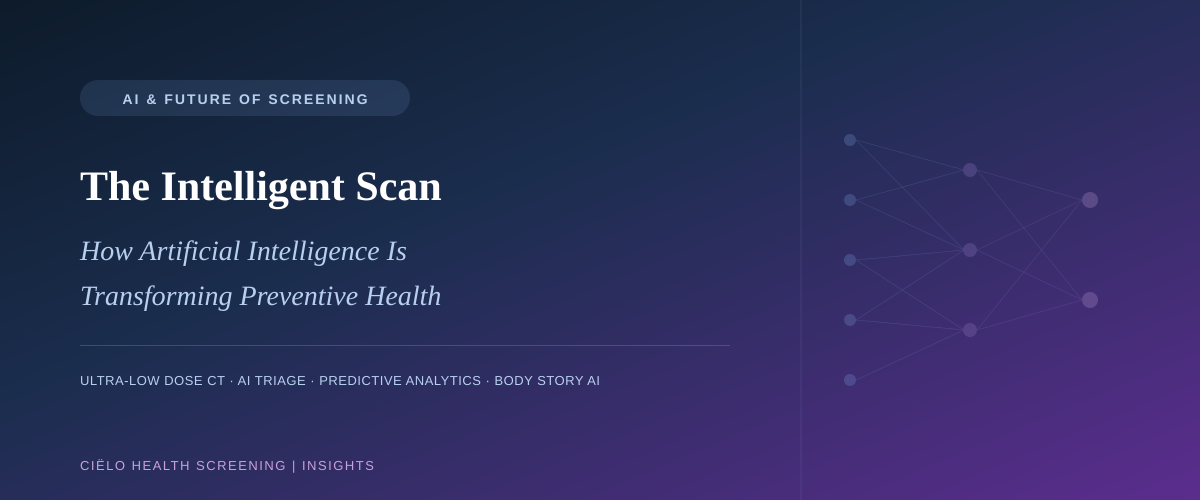
Modern screening technologies have fundamentally changed what is possible. Ultra-low dose CT can detect lung nodules at a stage when surgical cure rates exceed 80 per cent. Digital mammography identifies breast lesions years before they become palpable. Genetic panels for BRCA1, BRCA2, and Lynch syndrome markers can identify individuals at elevated hereditary risk, enabling intensified surveillance protocols. The technology exists. The imperative now is access and adoption.
The Corporate Dimension
Lifestyle disorders do not stop at the clinic door. They walk into offices, factories, and boardrooms every day, silently eroding productivity, increasing absenteeism, and inflating healthcare costs. For Indian corporations—particularly in high-stress sectors such as finance, technology, and manufacturing—the health of the workforce is not merely a welfare issue. It is an economic variable with measurable impact on the bottom line.
Corporate health screening programmes that go beyond the perfunctory annual check-up—incorporating imaging, metabolic profiling, and risk stratification—offer organisations the ability to understand the health demographics of their workforce with precision. The data, anonymised and aggregated, can inform benefits design, workplace wellness initiatives, and long-term human capital planning. For the individual employee, it is an opportunity to receive screening of a calibre they might not otherwise access.
Prevention as Empowerment
The framing of lifestyle disorders often carries an undertone of blame—as though the individual alone is responsible for systemic forces that have reshaped food supply, work culture, and urban design. A more productive framing—and a more accurate one—is that of empowerment. The individual cannot single-handedly reverse urbanisation or reform the food industry. But they can, with the right information, make informed decisions about their own body.
This is what screening provides: information. Not fear, not guilt, but clarity. A DEXA scan that quantifies visceral fat gives a person a number they can work with—and work against. An HbA1c trend over three years tells a story of trajectory, not just of today’s value. A calcium score transforms abstract cardiac risk into structural reality that can be seen, understood, and acted upon.
The epidemic of lifestyle disorders will not be reversed by screening alone. It will require policy, education, urban planning, and food regulation. But at the individual level—one person, one family, one check-up at a time—screening is the most powerful tool available to turn awareness into action and risk into resilience.
The most important health decision is not the treatment you receive when disease arrives. It is the screening you undertake while you still have time to change the story.
About Ciëlo Health Screening Ciëlo Health Screening offers comprehensive preventive health assessments that detect lifestyle disorders at their earliest, most actionable stages. Through integrated imaging, pathology, functional testing, and genetic profiling, Ciëlo empowers individuals and organisations to move from reactive treatment to proactive health management. |


.gif)