


PREVENTIVE HEALTH | EDITORIAL
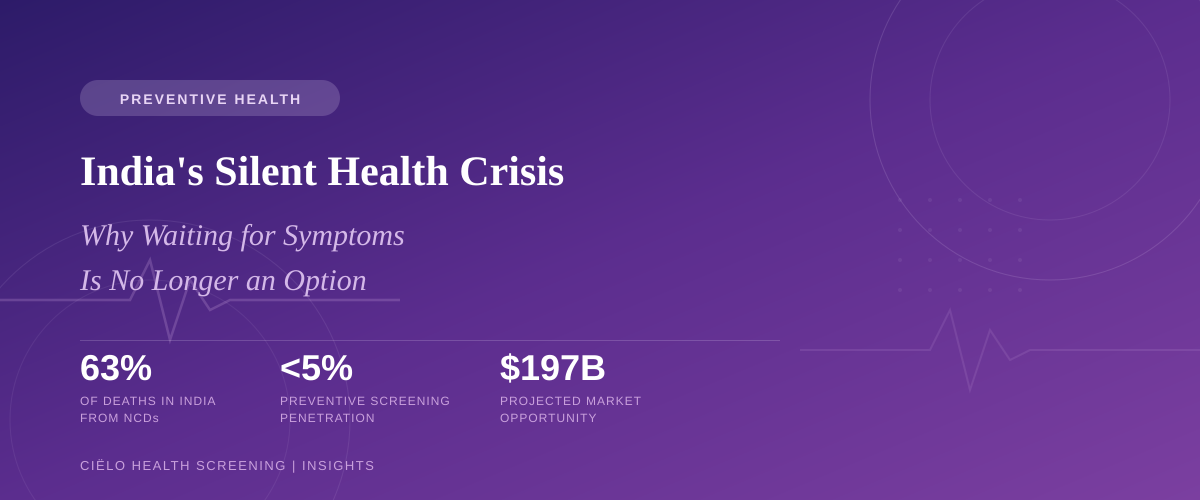
India’s Silent Health Crisis
Why Waiting for Symptoms Is No Longer an Option
There is a particular kind of silence that precedes most health crises in India. It is not the silence of ignorance—Indians are, by and large, aware that diabetes runs in families, that heart disease is rising, that cancer does not always announce itself. It is, rather, the silence of postponement. The quiet conviction that if nothing hurts, nothing is wrong.
That conviction is increasingly at odds with the data. India now carries one of the highest burdens of non-communicable diseases in the world. Cardiovascular disease, diabetes, chronic respiratory conditions, and cancer together account for approximately 63 per cent of all deaths in the country. What makes this figure especially troubling is not its size—it is the age at which these conditions are striking. Indians are developing heart disease a full decade earlier than their Western counterparts. Type 2 diabetes is appearing in people in their twenties. Fatty liver disease, once considered a condition of middle age, is now being identified in young professionals.
The Cost of Waiting
The economics of late detection are stark. A condition identified at Stage I often requires intervention that is simpler, less invasive, and far less expensive than the same condition identified at Stage III or IV. Consider the difference between managing prediabetes through dietary adjustment and exercise versus managing advanced diabetes with insulin, nephrology referrals, and dialysis. Or the difference between a coronary calcium score that prompts statin therapy and lifestyle change versus an emergency bypass surgery following a cardiac event.
The financial burden is only part of the story. Late detection erodes quality of life, disrupts families, and removes productive individuals from the workforce at their peak. India’s National Health Policy has acknowledged the urgent need for preventive infrastructure, yet fewer than five per cent of the population undergoes any form of structured health screening. The gap between what is known and what is acted upon remains vast.
Why Symptoms Are a Lagging Indicator
Modern medicine has made extraordinary advances in understanding how diseases develop. One of the most important insights is that the majority of serious conditions—cardiac disease, many cancers, metabolic syndrome, liver fibrosis—begin their journey years before any symptom manifests. The body compensates. Arteries narrow gradually. Insulin resistance builds incrementally. Fat accumulates in the liver without pain. By the time a symptom forces a visit to the doctor, the underlying process may have been underway for a decade.
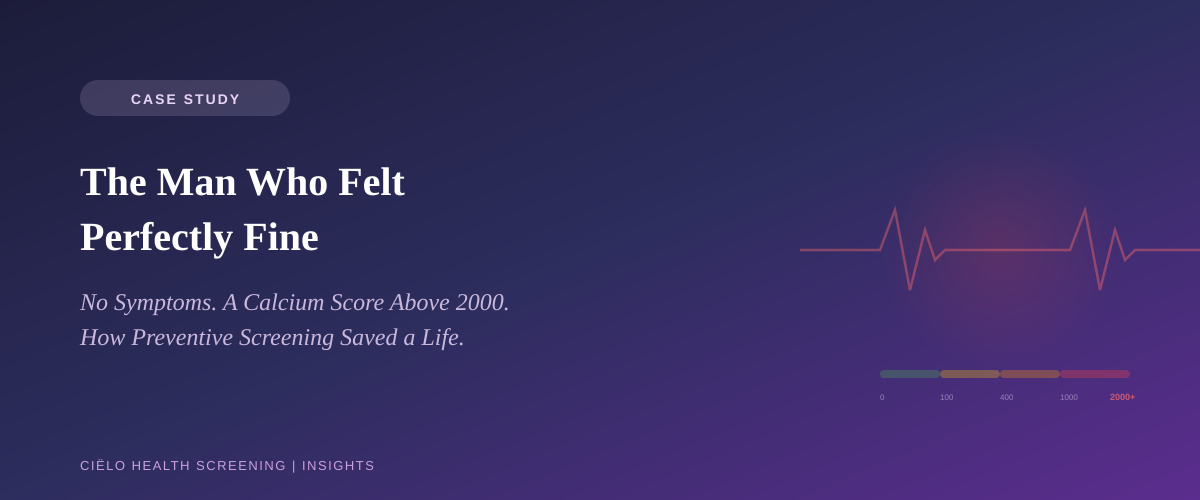
This is the fundamental paradox of symptom-driven healthcare: the moment of greatest opportunity for intervention is also the moment of least apparent urgency. A person whose coronary calcium score is 400—indicating significant plaque—may feel entirely well. Their morning run still feels good. Their energy is fine. And yet, the structural reality inside their arteries tells a different story entirely.
Preventive screening exists precisely to close this gap. It is not about creating anxiety or medicalising wellness. It is about using the tools that modern science has given us—imaging, biomarkers, genetic profiling—to identify risk before it becomes disease.
The Indian Context: A Perfect Storm
Several factors converge to make India especially vulnerable. Rapid urbanisation has altered dietary patterns dramatically—traditional diets rich in fibre and micronutrients have given way to processed foods, refined sugars, and sedentary lifestyles. The genetic predisposition of South Asians to insulin resistance and visceral fat accumulation compounds the problem. Occupational stress, particularly in India’s booming but demanding corporate and entrepreneurial sectors, adds another layer.
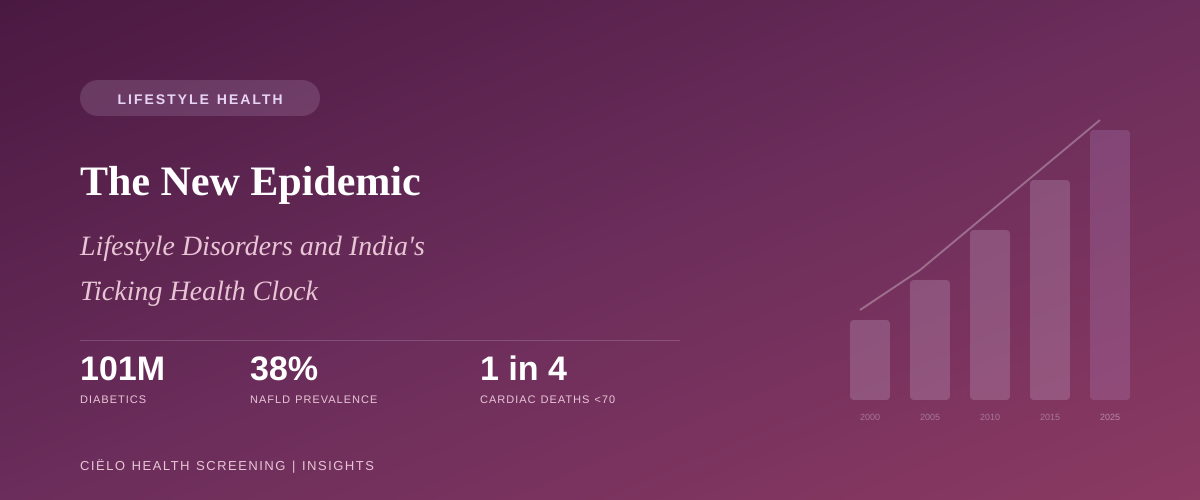
India is also home to the world’s largest diabetic population—an estimated 101 million people—and the numbers are rising. Non-alcoholic fatty liver disease affects roughly 38 per cent of the adult population. One in four cardiovascular deaths in India occurs in individuals under the age of 70. These are not projections for a distant future. These are the realities of today.
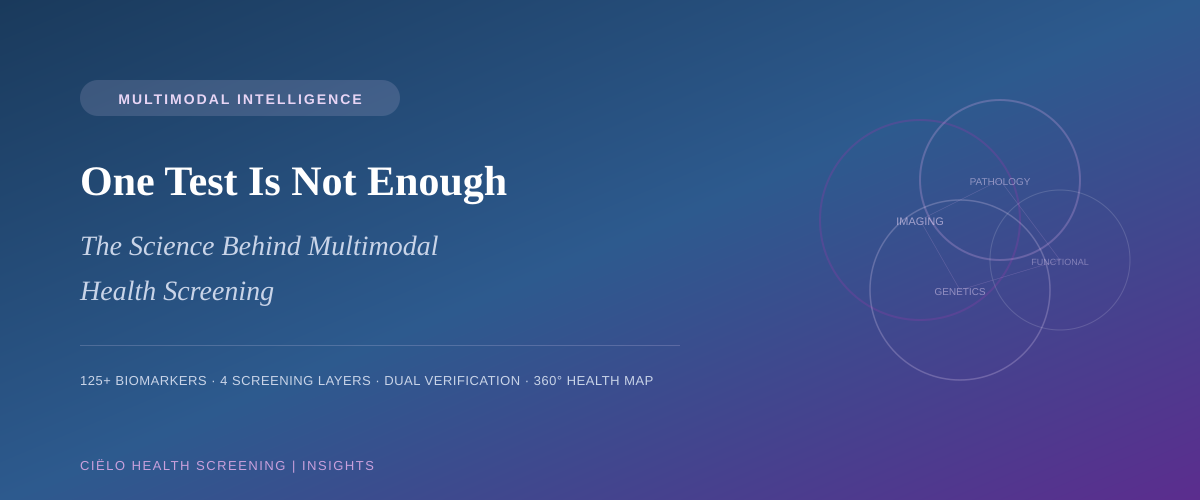
And yet, the infrastructure for catching these conditions early remains woefully thin. Most health check-ups in India consist of basic blood work and a cursory physical examination—tools that are necessary but insufficient. They cannot detect a calcifying artery. They cannot identify early-stage visceral fat accumulation with precision. They cannot distinguish between benign and concerning patterns in organ tissue. This is where advanced, multi-modality screening becomes not merely useful but essential.
What Prevention Really Means
Prevention, properly understood, is not the absence of disease. It is the presence of foresight. It is a structured, evidence-based process of understanding where a person’s body stands today and where it is likely heading if nothing changes. It means looking at a combination of blood chemistry, imaging findings, body composition data, and—where indicated—genetic markers to construct a coherent picture of health.
At its best, preventive screening turns health from a black box into a navigable map. A slightly elevated HbA1c, a liver fat fraction of 12 per cent, declining bone density, and a coronary calcium score of 150 may each seem manageable in isolation. But together, they reveal a metabolic trajectory that deserves immediate attention and action. The power lies in the synthesis—in the ability to read the story that the body is telling, even when the person feels perfectly fine.
A Shift in Culture, Not Just Medicine
For preventive health to succeed in India, it must transcend the clinical. It must become a cultural practice—embedded in how families think about wellbeing, how companies invest in their people, and how individuals define responsibility to themselves and those who depend on them.
In Gujarat, where business acumen and long-term planning are deeply ingrained, this shift is already beginning. Families that would never invest without due diligence are starting to apply the same logic to their health. Corporate leaders who meticulously audit their balance sheets are beginning to audit their biomarkers. The language of foresight—risk assessment, early intervention, return on investment—translates naturally from business to biology.
This cultural shift will not happen overnight. But it will happen. The economics are too compelling, the science too advanced, and the consequences of inaction too severe for it to remain at the margins. India’s preventive healthcare market, already projected to reach $197 billion, represents not just a commercial opportunity but a civilisational imperative.
The Window Is Open
There is a window—measured in years, sometimes decades—between the moment a health risk begins and the moment it becomes irreversible. For many conditions, that window is wide enough to change the outcome entirely. But it requires looking. It requires the willingness to know.
Preventive screening is that act of looking. It is not an indulgence. It is not vanity. It is the most rational decision a person can make about their future—to understand, with clarity and precision, where they stand today so they can choose where they go tomorrow.
The question India faces is not whether preventive health matters. The evidence has settled that. The question is how quickly we can move from knowing to doing—from awareness to action, from reaction to foresight. The silence before the crisis need not be permanent. It can, instead, become the moment of intervention.
Some of the most serious diseases do not begin with symptoms. They begin quietly, at a cellular level. Screening is our way of listening early.
About Ciëlo Health Screening Ciëlo Health Screening integrates advanced imaging, laboratory diagnostics, genetics, and AI-driven insights into a single, seamless preventive health experience. With 125+ biomarkers assessed in 100 minutes, Ciëlo empowers individuals and organisations to understand their health before symptoms begin. |


.gif)