



Featured Read
India’s Silent Health Crisis
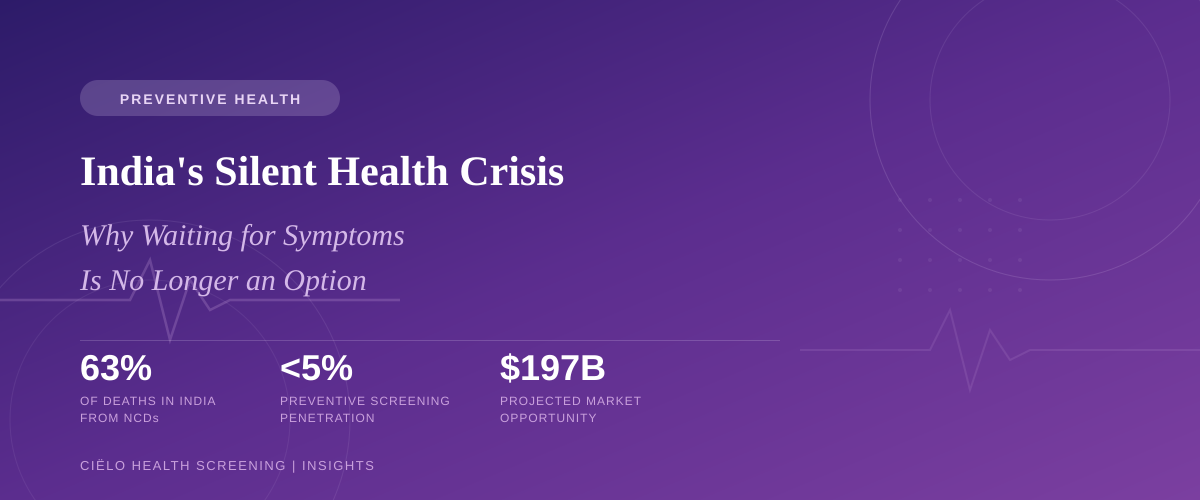
PREVENTIVE HEALTH | EDITORIALIndia’s Silent Health CrisisWhy Waiting for Symptoms Is No Longer an OptionThere is a particular kind of silence that precedes most health crises in India. It is not the silence of ignorance—Indians are, by and large, aware that diabetes runs in families, that heart disease is rising, that cancer does not always announce itself. It is, rather, the silence of postponement. The quiet conviction that if nothing hurts, nothing is wrong.That conviction is increasingly at odds with the data. India now carries one of the highest burdens of non-communicable diseases in the world. Cardiovascular disease, diabetes, chronic respiratory conditions, and cancer together account for approximately 63 per cent of all deaths in the country. What makes this figure especially troubling is not its size—it is the age at which these conditions are striking. Indians are developing heart disease a full decade earlier than their Western counterparts. Type 2 diabetes is appearing in people in their twenties. Fatty liver disease, once considered a condition of middle age, is now being identified in young professionals.The Cost of WaitingThe economics of late detection are stark. A condition identified at Stage I often requires intervention that is simpler, less invasive, and far less expensive than the same condition identified at Stage III or IV. Consider the difference between managing prediabetes through dietary adjustment and exercise versus managing advanced diabetes with insulin, nephrology referrals, and dialysis. Or the difference between a coronary calcium score that prompts statin therapy and lifestyle change versus an emergency bypass surgery following a cardiac event.The financial burden is only part of the story. Late detection erodes quality of life, disrupts families, and removes productive individuals from the workforce at their peak. India’s National Health Policy has acknowledged the urgent need for preventive infrastructure, yet fewer than five...




.gif)